
Proiecte de cercetare in desfașurare
CARDEA (Project 101058572 – HORIZON-WIDERA-2021-ERA-01)
CARDEA is a group (many of us HR Professionals) with a proven track record in the delivery of initiatives to support research staff within our own universities and organisations. Under the framework provided by the HR Excellence in Research initiative we work to improve policy and practice, recruitment and working conditions, and the training and development of research staff. Through CARDEA we will now leverage our experience to introduce policy and career practice guidelines for Research Managers in the European Research Area.
The overall objective of CARDEA is to enable the Professionalisation of Research Management as a valued career choice within the European Research Area. Through CARDEA we will propose clear and identified role competencies, progression pathways, standards for benchmarked and indexed salaries and access to appropriate skills development for Research Managers at all stages of their careers.
Electrical Engineering Faculty – driving innovation in the EVOSST project
The EVOSST project (Evaluation and Valorization of Social Services for a Sustainable Transition) represents a pioneering initiative funded under the Horizon Europe Programme, focusing on optimising social services through cutting-edge analysis and policy development. At the heart of this ambitious project, the National University of Science and Technology POLITEHNICA Bucharest (POLITEHNICA) through Electrical Engineering Faculty is taking a central role, leading Work Package 2 (WP2): Lifecycle Impact Analysis with Dynamic Modelling.
WP2 is critical to the EVOSST project’s overarching aim of improving social services by harnessing data-driven decision-making to guide sustainable transition. Under POLITEHNICA’s leadership via Electrical Engineering Faculty, this work package aims to develop a robust dynamic modelling framework capable of accurately assessing the lifecycle impacts of various social services. The scope of this task encompasses sophisticated methodologies, including big data analytics, longitudinal studies, and integration of heterogeneous data streams to model complex social service interactions effectively.
A cornerstone of the faculty’s strategy within WP2 is the continuous collaboration with multiple international partners, reflecting the interdisciplinary ethos of the EVOSST consortium. Participants including UOWM, RDF, Z-PLUS, SM, iSPRINT, and E-ARC are actively involved, ensuring the developed models reflect real-world complexities and are sensitive to diverse stakeholder needs. The approach prioritises transparency and accessibility, making advanced analytical outcomes usable for policymakers, social service providers, and the broader public. To this end, they emphasise the need for robust risk management protocols and transparent methodologies, addressing common barriers such as incomplete data records and avoidance among policymakers towards embracing complex analytical tools.
Through this strategic leadership of WP2, POLITEHNICA is not only contributing to the EVOSST project but also transforming Europe’s social service landscape through innovation, collaboration, and rigorous scientific inquiry
WP2 in Action: Building the Data Foundation for EVOSST
Within EVOSST, Work Package 2 (WP2), Lifecycle Impact Analysis with Dynamic Modelling, plays a central role in transforming data into insight. The overall aim of WP2 is to support the analysis of the long-term impact of social services across different demographic groups and national contexts. By doing so, it helps build the evidence base needed for stronger modelling, clearer analysis, and better-informed policy and practice.
WP2 is structured around four connected tasks: data collection and integration, model development and longitudinal study design, data analysis and visualisation, and model refinement with stakeholder validation. At the heart of this work lies Task 2.1: Data Collection and Integration, which provides the empirical foundation for everything that follows. Without the right data, dynamic modelling cannot deliver meaningful results. This is why Task 2.1 has been such a decisive step for the project.
A major achievement of Task 2.1 has been the development of a two-stream data collection strategy designed specifically for EVOSST’s modelling needs.
The first stream focused on extracting data from the SHARE platform, using waves 8 and 9 for the partner countries Romania, Greece, Belgium, and Bulgaria. This gave the project access to a strong and harmonised source of data across multiple national contexts. Working with SHARE allowed the team to build on an established platform and to ensure comparability across countries, which is essential when analysing the long-term effects of social services in a robust and consistent way.
At the same time, the WP2 team identified an important limitation. SHARE data target adults aged 50 and above. While this makes SHARE highly valuable for studying older populations, EVOSST needed to address a broader part of the population in order to support lifecycle modelling more effectively. In particular, the project needed data from young adults, whose experiences and expectations are also relevant for understanding the wider social impact of services.
This led to the second stream of Task 2.1: the development of a dedicated EVOSST questionnaire tailored to the project’s specific modelling requirements. Rather than depending only on existing datasets, the team designed a survey capable of capturing information directly aligned with EVOSST’s analytical goals. The questionnaire was then used to collect data from young adults at the National University of Science and Technology POLITEHNICA Bucharest, helping to fill the age gap left by SHARE and broadening the scope of the dataset.
The questionnaire used in this process can be accessed here: EVOSST questionnaire.
This two-stream approach is one of the strongest elements of WP2 so far. On one side, the project benefits from the depth and cross-country comparability of SHARE data. On the other, it adds a targeted, project-specific layer of primary data collection that brings younger adults into the picture. Together, these two sources create a richer and more balanced evidence base, one that is better suited to the needs of dynamic modelling and lifecycle impact analysis.
The value of this work goes beyond data collection alone. Task 2.1 is laying the groundwork for the next stages of WP2, including model development, longitudinal study design, advanced analysis, visualisation, and stakeholder validation. In practical terms, this means that the data being gathered today will shape how EVOSST understands the sustainability, effectiveness, and long-term benefits of social services tomorrow.
As the project moves forward, WP2 will continue to connect data, modelling, and real-world relevance. The work completed in Task 2.1 shows how careful methodological design can strengthen the entire project: combining high-quality secondary data with targeted primary data collection to reflect a wider population and support more meaningful analysis. In this sense, Task 2.1 is not just the starting point of WP2, but one of its most important contributions to EVOSST as a whole.

I-GRETA (ERA-Net Joint Call 2019 (MICall19)), 2020-2023
The goal of I-GReta is to develop solutions for planning and operation of highly flexible energy systems benefitting from storage capacities. These will be capable of integrating high shares of renewables in regional and local energy networks through integrated demand flexibility and forecasting on building level as well as large-scale optimization-based control of electrical, heating and cooling consumption.
The consortium intends to build a real-world digitalized and decentralized energy system. I-GReta will connect 5 trial sites in 4 countries via a professional ICT platform benefitting from FIWARE components. Occupants, owners and system operators as key need owners will participate and assess the operation of the respective systems in a Virtual Smart Grid (VSG) based on the platform. A key use case will be the trading of storage capacities via the platform. Individual storage solutions will additionally provide high value and immense impact potential in the local perspective.

Europe-Brazil-Bolivia-Cuba Capacity Building Using Globally Available Digital Learning Modules (EUBBC-Digital) – (618925-EPP-1-2020-1-BR-EPPKA2-CBHE-JP – E+ CBHE), 2021-2024
The main goal of the project is to promote the innovation in education. Innovation in education is of high relevance in today’s society because it improves the life environment for billions of people. Development of more efficient higher education and energy, on the other hand, combines two pressing needs of humanity. The project aims at connecting Europe and Partner Countries in facing this challenge by creating, sharing, exploring and valorising knowledge, expertise and smart vision using high tech, human touch as well as global collaboration.
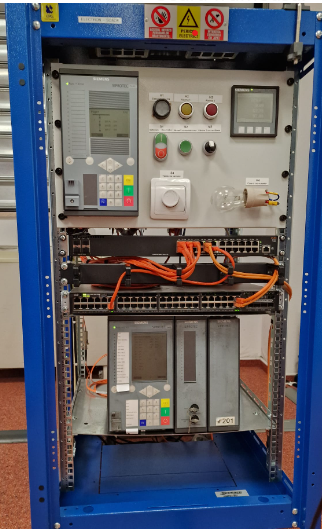
The New Testbed Developed by ELECTRICA, TRANSELECTRICA, and Politehnica University within the ELECTRON Project
The digital transformation of power distribution substations brings numerous advantages, such as enhanced control, monitoring, and efficiency. However, with this, increasing digitisation also comes a significant rise in cybersecurity risks. Recognising the critical need for robust security measures, ELECTRICA, TRANSELECTRICA, and the National University of Science and Technology Politehnica Bucharest have collaborated under the ELECTRON project (https://electron-project.eu/) to develop a cutting-edge laboratory testbed designed to enhance the cybersecurity of power substations.
A Game-Changing Testbed for Substation Cybersecurity
The Power of Real-World Simulation
Open-Source Tools: A Flexible, Cost-Effective Approach
Ensuring the Security of Critical Infrastructure
Collaboration for the Future of Secure Energy Grids
H2020 – INTERRFACE – TSO-DSO-Consumer INTERFACE aRchitecture to provide innovative grid services for an efficient power system
With the growth of renewables, the increased interconnection of European grids, the development of local energy initiatives, and the specific requirements on TSO – DSO cooperation as set forth in the different Network Codes and Guidelines, TSOs and DSOs face new challenges that will require greater coordination, this way creating the need for a project such as INTERRFACE having the greater coordination between TSOs and DSOs as its core objective (http://www.interrface.eu/).
Grant agreement ID: 824330
Funded under : H2020-EU.3.3.4. – A single, smart European electricity grid
Topic: LC-SC3-ES-5-2018-2020
Start date: 1 January 2019
End date: 31 December 2022
H2020- FARCROSS – FAcilitating Regional CROSS-border Electricity Transmission through Innovation
FARCROSS: FAcilitating Regional CROSS-border Electricity Transmission through Innovation is an R&D project financed by the European Commission under Horizon2020 Programme (Grant Agreement No 864274) and spans on the period October 2019 – September 2023. The FARCROSS project intends to connect major stakeholders of the energy value chain and demonstrate integrated hardware and software solutions that will facilitate the “unlocking” of the resources for the cross-border electricity flows and regional cooperation (https://farcross.eu/).
Grant agreement ID: 864274
Funded under : H2020-EU.3.3.4. – A single, smart European electricity grid
Topic: LC-SC3-ES-2-2019 – Solutions for increased regional cross-border cooperation in the transmission grid
Start date: 1 October 2019
End date: 30 September 2023
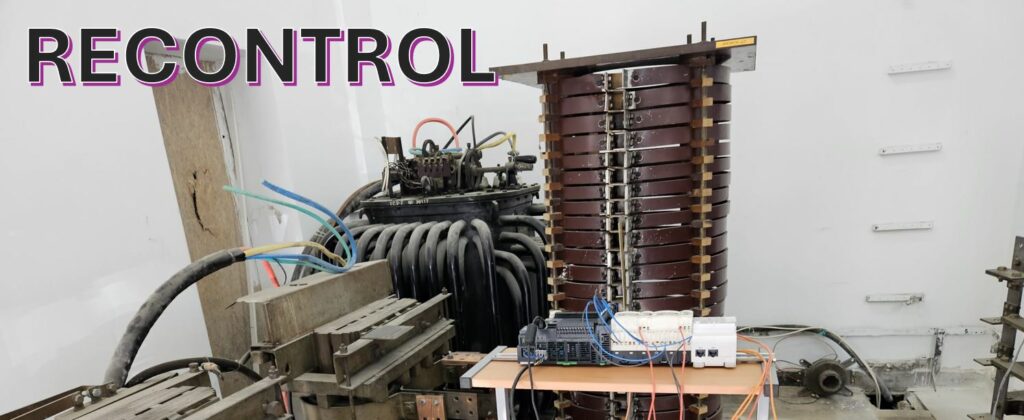
Controlul și telemonitorizarea la distanță a unui întreruptor de înaltă
tensiune, cu comutație în vid, de exterior, destinat sistemului feroviar
Obiectivul general al contractului îl reprezintă proiectarea, dezvoltarea și testarea în condiții de laborator a unui model experimental de întreruptor de exterior, bipolar de înaltă tensiune cu comutație în vid (Un=27,5 kV, In=1.250 A, Ik= 25 kA) cu sistem de telecomandă și telemonitorizare. În cadrul etapei 1 a contractului s-au realizat studii asupra soluțiilor și tendințelor constructive în vederea stabilirii unei soluții noi de întreruptor bipolar cu comutație în vid, de înaltă tensiune de 27,5 kV și a sistemului de control și telemonitorizare la distanță a acestuia. În cadrul etapei 2 a contractului s-a proiectat și realizat un model experimental de sistem de control și telemonitorizare la distanță a unui întreruptor bipolar cu comutație în vid, de înaltă tensiune de 27,5 kV.
Titlu: EVOSST Energy Cod proiect: PN-IV-P8-8.1-PRE-HE-ORG-2025-0290 Nr. Proiect:121PHE/2025 Durata proiectului: 01/07/2025 – 30/06/2027

Proiectul EVOSST Energy Index își propune dezvoltarea și validarea unui index energetic integrat destinat evaluării comportamentului consumatorilor de energie electrică, având drept scop optimizarea consumului în sistemul energetic național. Activitățile includ analiza bibliografică, definirea metodologiei de calcul și dezvoltarea unui algoritm software specific indexului energetic EVOSST. Ulterior, se va construi un prototip experimental echipat cu un contor inteligent și un microcalculator Raspberry Pi pentru validarea în timp real a algoritmului propus. Rezultatele vor fi testate în condiții controlate pentru a demonstra robustețea și acuratețea indexului. În final, datele obținute vor permite clasificarea consumatorilor casnici în funcție de impactul asupra rețelei energetice și elaborarea unor recomandări concrete de optimizare.